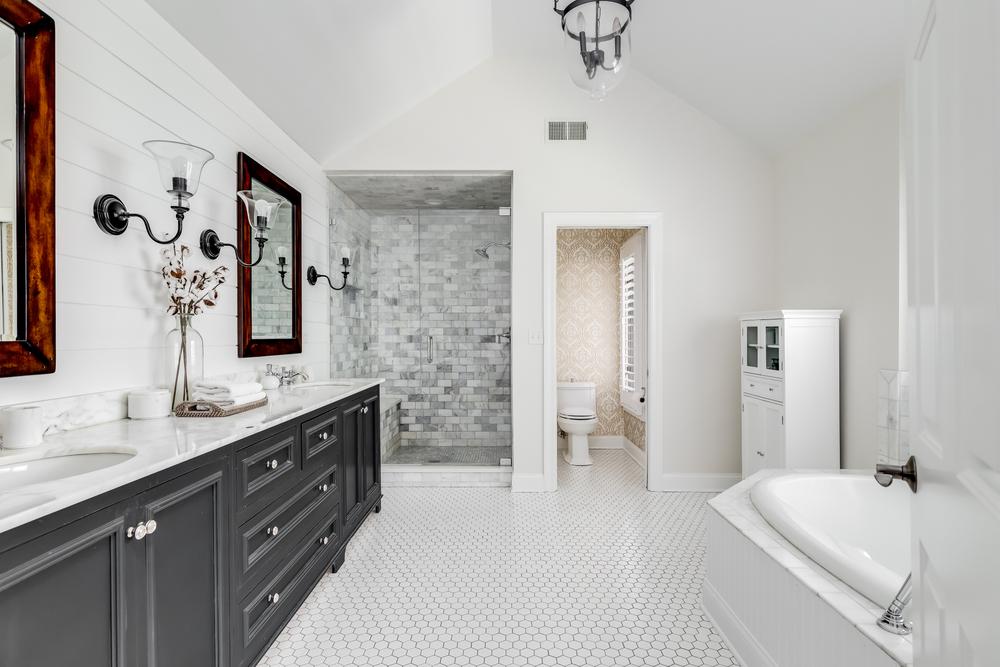
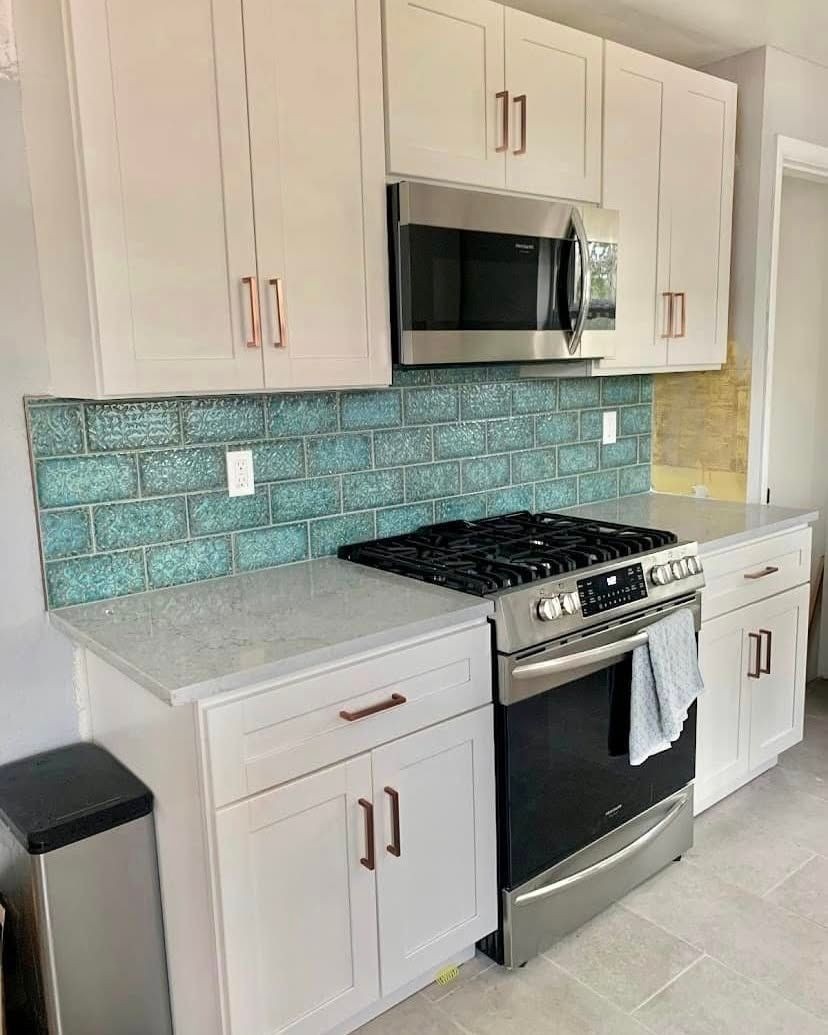
How do you match a backsplash to a countertop?
Begin with the surface that has the strongest visual pattern. If your countertop has prominent veining, a quieter backsplash can prevent the two finishes from competing. A simple countertop offers more room for a patterned mosaic or a distinctive tile layout. Compare physical samples in your own kitchen under both daytime and evening lighting.
Look at undertones as well as color. Two white materials may appear very different when placed side by side. One may lean warm while the other looks cooler. Consider cabinet colors, hardware and flooring as part of the same palette instead of choosing each finish independently.
Select backsplash materials that suit your kitchen
Glazed ceramic tile can be a practical wall finish for many kitchens. Porcelain offers a range of looks, including stone-inspired finishes. Glass tile can bring reflected light and color into a space, while mosaics introduce smaller-scale detail. Natural stone can add texture and variation but may require a more specific maintenance routine.
Think about how often you cook and where splashes tend to occur. A heavily textured surface behind a range may require more effort to clean than a smoother one. Confirm that any tile and setting materials are suitable for the location, particularly near heat-producing appliances. Follow appliance clearance requirements rather than assuming decorative tile changes them.
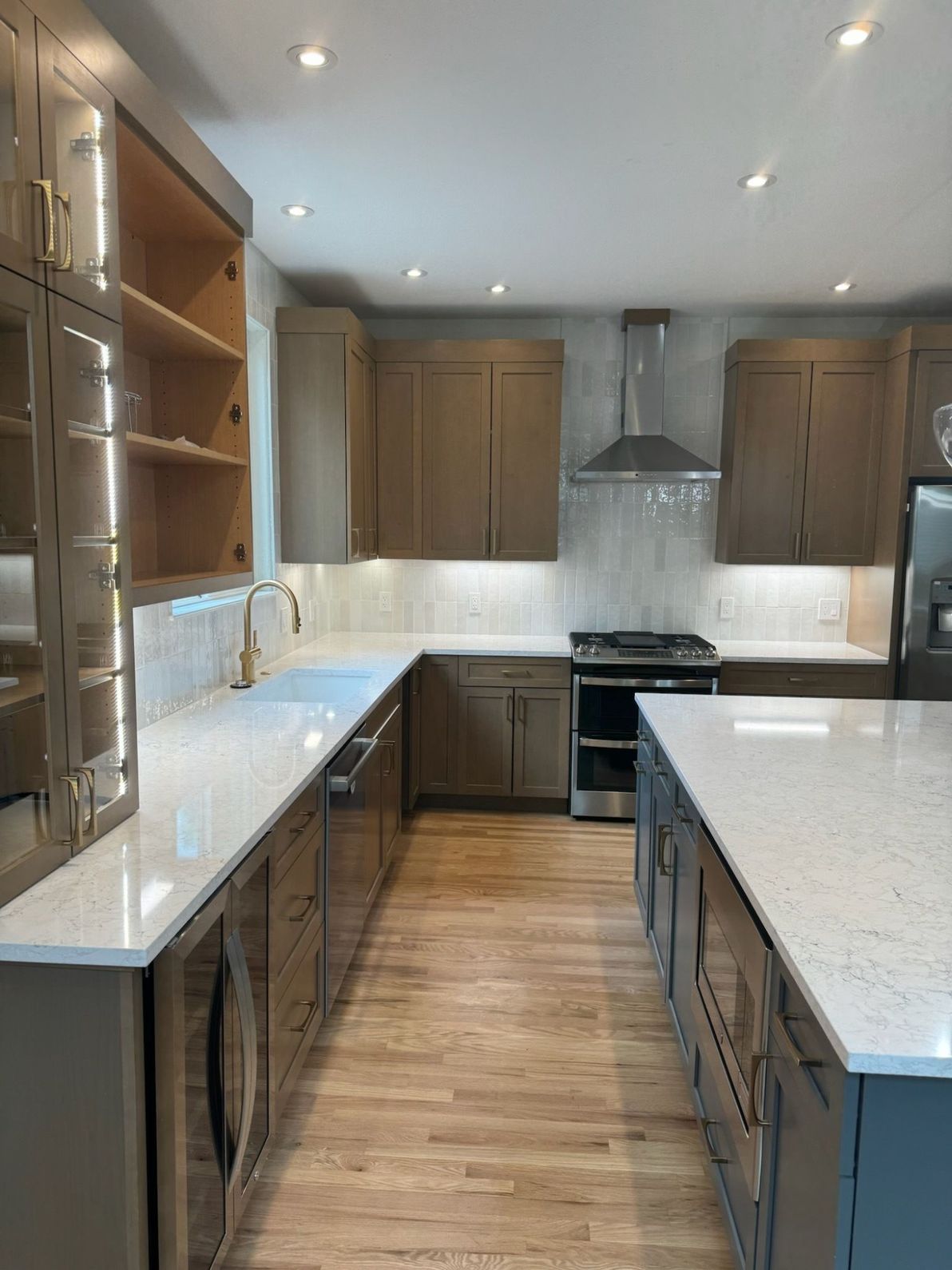
Choose a countertop based on real use
Granite is a natural stone available in a broad range of colors and patterns. Different slabs may have different absorption characteristics and maintenance needs. Marble is valued for its distinctive veining, but it can be etched by acidic foods such as lemon juice or vinegar. Sealing does not prevent all etching. Quartz surfaces offer another option, with care requirements that vary by product.
Consider how you prepare meals, whether you place hot cookware near the range and how much maintenance you are comfortable with. Use cutting boards and trivets regardless of the material. Review care instructions for your chosen surface before purchasing it, rather than relying on broad claims that a particular countertop is indestructible.
Custom tile patterns: where they make a difference
A classic horizontal subway tile layout gives a kitchen a familiar, understated appearance. Vertical stacking can emphasize height, while herringbone introduces directional movement. Hexagons and mosaics can create a focal point when used behind a range or in a defined section of wall.
The layout needs to account for outlets, windows, cabinet edges and corners. A pattern that looks balanced on a sample board may require careful adjustment on the actual wall. Ask the installer to discuss where the pattern begins and ends before setting tile. This is especially useful when working with decorative borders or tiles with irregular shapes.
Why the countertop and backsplash installation sequence matters
In many kitchen projects, the countertop is installed before the backsplash. That allows the backsplash layout to respond to the finished countertop height and wall conditions. The exact sequence depends on the project and should be coordinated with the installer, cabinet contractor and any other trades involved.
Plan for appropriate flexible joints at transitions rather than treating every connection as a rigid grout joint. Discuss edge treatments where the backsplash ends at an open wall. If outlets need to be repositioned or adjusted, coordinate that work with a qualified electrical professional. These details can affect both the appearance and functionality of the finished kitchen.
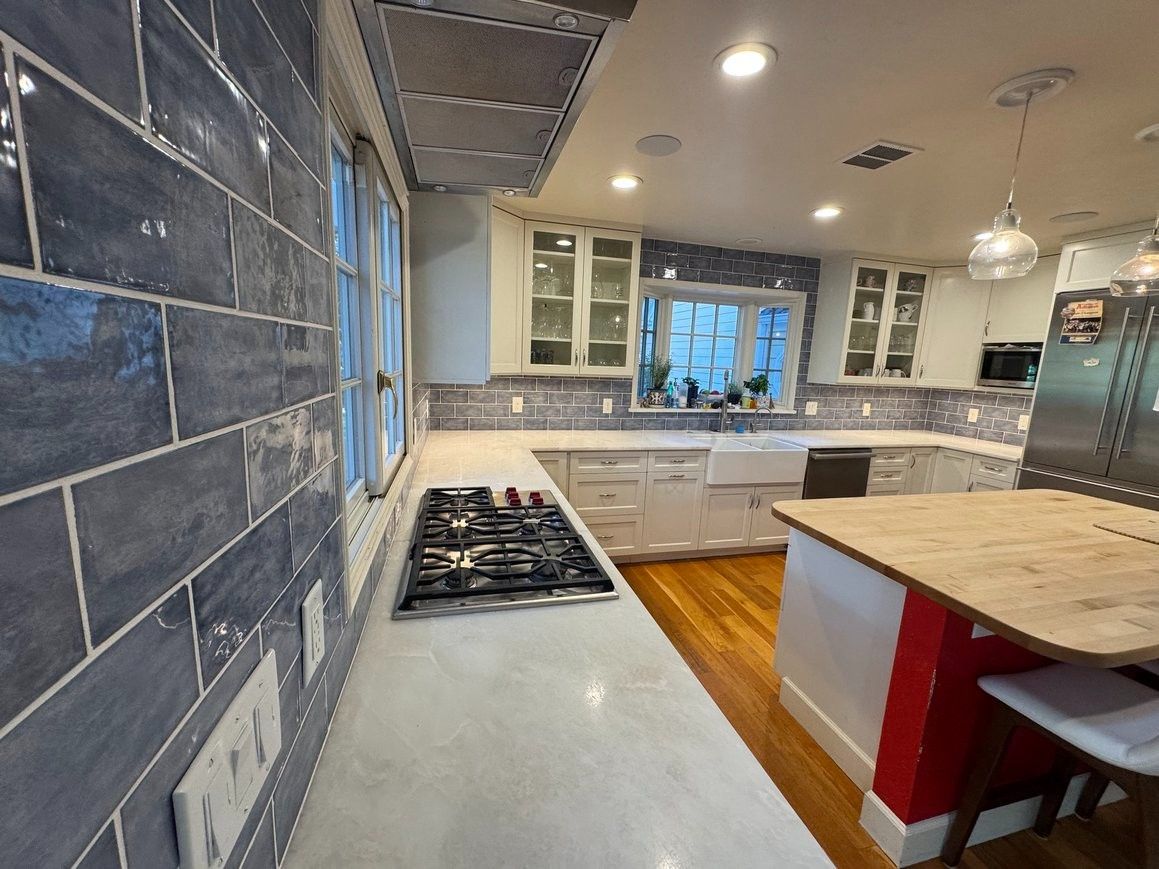
Can you update a kitchen without replacing every cabinet?
Yes. A backsplash and countertop update can change the character of a kitchen while retaining cabinetry that is in suitable condition. The cabinets must be able to support the new countertop system and any required sink configuration. Existing wall conditions should also be reviewed before removing old finishes.
For homes in Englewood and Littleton, a focused surface upgrade may be a useful alternative to a full kitchen remodel. Keeping the existing layout can reduce the number of decisions involved, although hidden damage or incompatible materials can still change the scope. Discuss the condition of the existing surfaces before ordering new materials.
Prepare for installation day
Clear countertops and nearby cabinets as directed by your contractor. Arrange a temporary place for preparing meals if the kitchen will be unavailable. Confirm who is responsible for removing existing materials, disconnecting fixtures and reinstalling appliances. Keep the final product selections and layout notes together so everyone works from the same information.
When ordering natural stone, review the actual slab or approved layout where possible. Natural variation means a small sample may not represent the entire surface. For tile, confirm the quantity includes an appropriate allowance for cuts and future repairs. The amount needed depends on the pattern and room dimensions.
Free estimate
Bring your kitchen finishes together
Meza Tile & Stone helps homeowners coordinate kitchen tile, backsplashes, custom patterns and stone surfaces across Centennial and Southern Metro Denver. Call (720) 936-8701 or request a free estimate to discuss a kitchen surface upgrade that works with your home.